
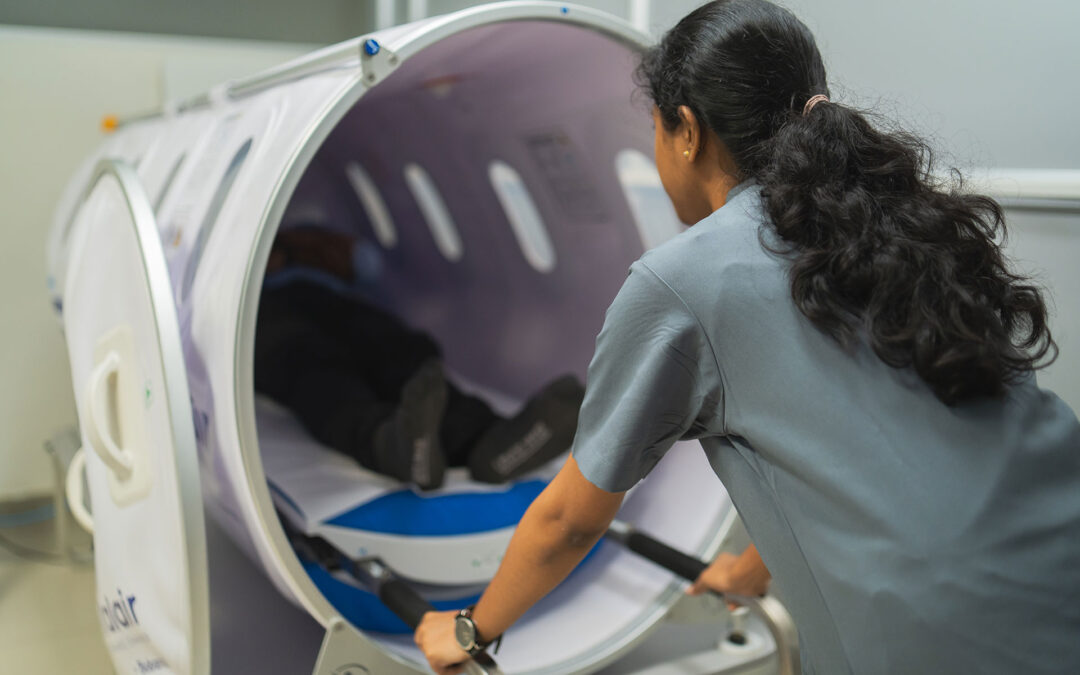
Diabetic foot ulcers are a serious complication affecting thousands of Kerala residents every year. HBOT for diabetic foot Kerala offers a proven, FDA-approved treatment that can save limbs and restore quality of life when conventional treatments fail.
The Diabetic Foot Crisis in Kerala
Kerala has one of the highest diabetes prevalence rates in India—affecting nearly 20% of adults. With diabetes comes the risk of devastating foot complications.
The Alarming Statistics:
- 15-25% of diabetic patients develop foot ulcers in their lifetime
- 40-70% of all lower limb amputations in India are diabetes-related
- 50-70% of diabetic foot ulcers become infected
- 14-24% of diabetic foot ulcers lead to amputation
- 50% five-year mortality rate after major amputation (worse than most cancers)
The Human Cost:
Beyond statistics are real people facing:
- Chronic pain and immobility
- Loss of independence
- Psychological trauma
- Financial devastation
- Risk of amputation
- Shortened lifespan
What is a Diabetic Foot Ulcer?
A diabetic foot ulcer is an open sore or wound that occurs on the foot of a person with diabetes. These wounds are notoriously difficult to heal due to the underlying disease processes.
![Medical diagram: Anatomy of a diabetic foot ulcer showing depth layers]
Why Diabetic Wounds Don’t Heal:
- Neuropathy (Nerve Damage)
- Loss of protective sensation
- Patient doesn’t feel injury developing
- Continued trauma to wound area
- Delayed recognition of problems
- Peripheral Arterial Disease (PAD)
- Reduced blood flow to extremities
- Insufficient oxygen delivery to tissues
- Impaired nutrient supply
- Waste product accumulation
- Immune Dysfunction
- Impaired white blood cell function
- Reduced infection-fighting ability
- Chronic inflammation
- Biofilm formation
- Hyperglycemia (High Blood Sugar)
- Inhibits cellular repair mechanisms
- Damages blood vessels further
- Impairs collagen production
- Feeds bacterial growth
- Biomechanical Factors
- Abnormal foot structure
- High pressure points
- Continued weight-bearing
- Improper footwear
Stages of Diabetic Foot Ulcers:
Grade 0: Intact skin, high-risk foot
Grade 1: Superficial ulcer
Grade 2: Deep ulcer (to tendon, bone, joint)
Grade 3: Deep ulcer with abscess or bone infection
Grade 4: Localized gangrene
Grade 5: Extensive gangrene requiring amputation
The goal of HBOT for diabetic foot Kerala treatment is to prevent progression and promote healing at any stage before Grade 5.
Conventional Treatment: Why It Often Fails
Standard diabetic foot ulcer care includes:
- Wound debridement
- Infection control (antibiotics)
- Pressure offloading
- Moisture balance dressings
- Blood sugar control
- Revascularization surgery (if needed)
The Problem:
Even with optimal conventional care:
- 30-40% of diabetic foot ulcers fail to heal
- Average healing time: 6-12 months (if they heal at all)
- Amputation rate: 14-24%
- Recurrence rate: 40% within one year, 65% within five years
The missing element? Adequate tissue oxygenation.
No amount of wound care can compensate for oxygen-starved tissues.
How HBOT Transforms Diabetic Foot Ulcer Healing
HBOT for diabetic foot Kerala addresses the fundamental problem: hypoxia (low oxygen) in wounded tissue.
The HBOT Mechanism for Diabetic Wounds:
- Overcoming Poor Circulation
In diabetes, narrowed blood vessels can’t deliver adequate oxygen. HBOT dissolves oxygen directly into blood plasma—bypassing the need for red blood cells. This dissolved oxygen reaches areas where blood flow is compromised.
- Normal breathing: 3 ml oxygen dissolved per liter of blood
- HBOT at 1.5 ATA: 60 ml oxygen dissolved per liter of blood
- Result: 20x more oxygen reaching wound tissue
- Stimulating New Blood Vessel Growth (Angiogenesis)
Oxygen triggers VEGF (vascular endothelial growth factor) production, causing new capillaries to sprout into the wound bed. More blood vessels = better long-term healing.
- Angiogenesis begins after 15-20 HBOT sessions
- New vessels visible on imaging by session 30
- Permanent improvement in tissue perfusion
- Killing Bacteria and Fighting Infection
HBOT has direct antimicrobial effects:
- Creates toxic oxygen radicals that kill anaerobic bacteria
- Enhances white blood cell killing ability by 300%
- Disrupts bacterial biofilms (protective shields bacteria create)
- Improves antibiotic penetration and effectiveness
Studies show: HBOT reduces infection rates in diabetic foot ulcers by 60-70%
- Accelerating Collagen Production
Collagen is the structural protein needed for wound closure. HBOT:
- Activates fibroblasts (collagen-producing cells)
- Increases collagen deposition by 400%
- Improves wound tensile strength
- Creates stronger, more durable healing
- Reducing Inflammation
Chronic inflammation prevents healing. HBOT modulates inflammatory response:
- Reduces pro-inflammatory cytokines
- Decreases edema (swelling)
- Allows wound to progress from inflammation to repair phase
- Mobilizing Stem Cells
HBOT increases circulating stem cells by 800%. These repair cells migrate to the wound, supporting tissue regeneration.
- Improving Diabetic Metabolic Function
Emerging research shows HBOT may:
- Improve insulin sensitivity
- Reduce HbA1c levels
- Enhance glucose metabolism
- Provide systemic benefits beyond wound healing
Clinical Evidence: HBOT for Diabetic Foot Ulcers
HBOT for diabetic foot Kerala treatment is supported by the strongest level of scientific evidence.
The Research is Clear:
FDA Approval
- HBOT is FDA-approved specifically for diabetic foot ulcers
- One of only 14 approved indications
- Based on rigorous clinical trials
Cochrane Review (Gold Standard)
- Systematic review of all quality studies
- Conclusion: HBOT significantly improves healing rates
- Reduces amputation risk by 60%
Major Clinical Trials:
Faglia Study (1996) – Milan, Italy
- 70 diabetic patients with foot ulcers
- HBOT group: 8.6% amputation rate
- Control group: 33% amputation rate
- Result: 74% reduction in amputations
Abidia Study (2003) – UK
- Randomized controlled trial
- HBOT significantly improved healing
- Transcutaneous oxygen levels dramatically increased
Löndahl Study (2010) – Sweden
- 94 patients, rigorous methodology
- HBOT group: 52% healed vs. 29% control group
- One-year follow-up: sustained benefits
Doctor’s Data (2014) – Meta-analysis
- Analysis of 1,400+ patients
- HBOT reduces amputation risk by 60-70%
- Healing rates improve by 40-50%
- Cost-effective compared to amputation
Success Rates with HBOT:
When HBOT for diabetic foot Kerala is added to standard care:
- Complete healing: 80-85% of ulcers
- Amputation prevention: 60-70% reduction
- Average healing time: Reduced from 45 weeks to 24 weeks
- Recurrence rates: Lower with HBOT treatment history
HBOT Protocol for Diabetic Foot Ulcers at Maana Health
Our HBOT for diabetic foot Kerala program follows internationally recognized protocols.
Comprehensive Treatment Approach:
Phase 1: Initial Assessment (Week 1)
Medical Evaluation:
- Complete wound assessment (size, depth, infection)
- Vascular assessment (blood flow to foot)
- Neuropathy evaluation
- X-rays (to rule out bone infection)
- Blood work (HbA1c, inflammatory markers, kidney function)
- Nutritional status assessment
Photography Documentation:
- Standardized wound photographs
- Weekly progress tracking
- Objective measurement tool
Treatment Plan Development:
- HBOT session number (typically 30-40)
- Adjunctive therapies needed
- Offloading strategy
- Nutritional optimization
- Blood sugar management
Phase 2: Intensive HBOT + Wound Care (Weeks 2-10)
HBOT Protocol:
- Frequency: 5-6 days per week (Monday-Saturday)
- Pressure: 1.5-2.0 ATA (higher pressure for wound healing)
- Duration: 90 minutes at therapeutic pressure
- Sessions: 30-40 total (may extend to 60 for severe cases)
Why This Protocol:
- Based on UHMS (Undersea & Hyperbaric Medical Society) guidelines
- Optimal pressure for angiogenesis and healing
- Frequency necessary for sustained oxygen effects
- Duration proven in clinical trials
Concurrent Wound Care:
- Weekly sharp debridement (removal of dead tissue)
- Advanced dressings (antimicrobial, moisture-balancing)
- Offloading devices (total contact cast, specialized boot)
- Infection management (antibiotics if needed, culture-guided)
- Revascularization (if vascular surgery indicated)
Systemic Support:
- Diabetes management: Endocrinologist coordination, target HbA1c <7%
- Nutrition optimization: High protein diet (1.2-1.5g/kg), micronutrients (zinc, vitamin C, vitamin A)
- Smoking cessation: Mandatory for optimal results
- Comorbidity management: Blood pressure control, cholesterol management
Phase 3: Transition and Maintenance (Weeks 11-16)
As Healing Progresses:
- Reduction in HBOT frequency (3-4x per week)
- Continued wound care
- Gradual return to weight-bearing
- Custom therapeutic footwear
- Patient education on prevention
Phase 4: Post-Healing Prevention (Ongoing)
After Complete Healing:
- Regular foot examinations (self and professional)
- Proper footwear at all times
- Daily foot care routine
- Blood sugar optimization
- Annual comprehensive foot assessment
- Immediate attention to any new wounds
What to Expect: Timeline and Results
HBOT for diabetic foot Kerala patients typically see progressive improvement.
Healing Timeline:
Week 1-2: Foundation Phase
- Reduced pain and discomfort
- Decreased wound drainage
- Reduced odor (if infection present)
- Inflammation begins to resolve
- Wound bed starts to look healthier (red granulation tissue)
Week 3-4: Active Healing Begins
- Visible decrease in wound size (10-20% smaller)
- Wound edges begin to contract
- Healthy pink tissue fills wound bed
- Infection signs disappear
- Patient reports feeling better systemically
Week 5-8: Accelerated Progress
- Significant size reduction (30-50% smaller)
- Wound depth decreases markedly
- New skin begins forming at edges
- Pain is minimal or gone
- Mobility improves
- Patient optimism increases
Week 9-12: Approaching Closure
- Wound is 70-80% smaller
- Almost completely filled in
- New skin covering most of area
- Patient able to wear regular footwear (with modifications)
- Return to more normal activities
Week 13-16: Complete Healing
- Full wound closure achieved (most patients)
- New skin fully formed
- Gradual strengthening of healed tissue
- Focus shifts to prevention
Important Note: Timeline varies by:
- Initial wound size and depth
- Presence of infection or bone involvement
- Blood sugar control
- Vascular status
- Patient compliance
- Overall health status
Some severe wounds may require 50-60 sessions for complete healing.
Patient Success Stories: Hope Restored
Real Patients from Kerala:
Case Study 1: 68-Year-Old from Ernakulam “I had diabetes for 20 years. When an ulcer developed on my big toe, it wouldn’t heal despite 8 months of treatment. Three doctors recommended amputation. I was devastated—I’m a retired teacher who loves gardening and walking. My daughter found Maana Health and their HBOT program. We decided to try before amputation. After 35 sessions in the Revitalair 430 chamber at the Aluva center, my ulcer completely healed. That was 2 years ago—still no recurrence. HBOT literally saved my foot and my independence.” – Mr. Krishnan Nair, Kochi
Case Study 2: 56-Year-Old from Thrissur “Type 2 diabetes with a non-healing ulcer on my heel. It was there for 11 months—nothing worked. Constant pain, couldn’t work, couldn’t sleep. Infection was spreading, and they discussed ankle amputation. I heard about Maana Health’s hyperbaric oxygen therapy from a friend. Started treatment at their Kochi center. Within 3 weeks, I saw real improvement for the first time. By session 40, completely healed. The staff was incredible, always encouraging me. I’m back to work, back to living.” – Mr. Suresh Kumar, Thrissur
Case Study 3: 45-Year-Old from Calicut “I’m young, active, and didn’t think diabetes complications would happen to me. But a small blister turned into a serious ulcer. After 6 months of failed treatments and worsening infection, my surgeon said I might lose part of my foot. I was terrified. HBOT at Maana Health’s Calicut facility changed everything. The science made sense—my wound needed oxygen, and regular treatment wasn’t delivering it. 32 HBOT sessions later, fully healed. I learned my lesson about diabetes management and foot care. I’m grateful every day.” – Mrs. Aysha Beevi, Kozhikode
Why Diabetic Foot Ulcers Need HBOT
The Oxygen Crisis in Diabetic Wounds:
Healing requires oxygen. Normal wound healing needs tissue oxygen levels of 30-40 mmHg. Diabetic foot ulcers typically measure 5-10 mmHg—critically low.
Without adequate oxygen: ❌ Fibroblasts cannot produce collagen
❌ Immune cells cannot kill bacteria
❌ Angiogenesis cannot occur
❌ Epithelial cells cannot multiply
❌ The wound remains stuck in chronic inflammation
With HBOT: ✅ Tissue oxygen reaches 200-400 mmHg
✅ All healing processes activate
✅ New blood vessels form
✅ Infection clears
✅ Wound progresses to closure
The Amputation Alternative:
HBOT for diabetic foot Kerala offers hope before amputation becomes necessary.
Amputation Consequences:
- Major surgical procedure with risks
- Long recovery (3-6 months)
- Prosthetics needed (costly, not perfect)
- Psychological trauma and depression
- Continued high risk to other limb
- Reduced life expectancy
- Loss of independence
- Financial burden: ₹3-10 lakhs for surgery and prosthetics
HBOT Prevention:
- Non-invasive treatment
- Can try before amputation
- Preserves natural limb
- Maintains quality of life
- Cost-effective compared to amputation
- Improves overall health
The Choice is Clear: Try HBOT first. Amputation can always be done later if truly necessary, but you can never reverse an amputation.
Cost and Insurance: Making HBOT Accessible
Investment in Limb Salvation:
HBOT for diabetic foot Kerala is a significant investment, but consider the alternative costs.
Typical Treatment Investment:
- 30-40 HBOT sessions
- Concurrent wound care
- Medical supplies
- Follow-up assessments
Package Pricing Available:
- Discounted rates for multiple sessions
- Flexible payment plans
- Family support options
Insurance Coverage: Many insurance plans cover HBOT for diabetic foot ulcers because it’s FDA-approved and cost-effective compared to amputation.
We can help:
- Verify your insurance coverage
- Provide necessary documentation
- Submit claims on your behalf
- Explain coverage details
Compare the True Costs:
| Cost Comparison | HBOT Treatment | Amputation + Rehab |
| Initial Treatment | ₹1.5-3 lakhs | ₹2-5 lakhs |
| Prosthetics | ₹0 | ₹3-8 lakhs |
| Ongoing Care | Minimal | High (maintenance, adjustments) |
| Quality of Life | Preserved | Significantly reduced |
| Return to Work | Full capability | Limited capacity |
| Psychological Impact | Positive outcome | Trauma, depression |
| 5-Year Cost | Lower | Much higher |
Contact us for detailed pricing: 📞 +91 99950 89400 | 📧 care@maanahealth.com
Prevention: After Your Ulcer Heals
HBOT for diabetic foot Kerala can heal your current wound, but prevention is crucial for your future.
Preventing Recurrence:
Daily Foot Inspection:
- Check every inch of both feet daily
- Use a mirror for bottom of feet
- Look for redness, blisters, cuts, swelling
- Feel for hot spots (early inflammation)
- Immediate medical attention for any concern
Proper Footwear:
- Custom therapeutic shoes (prescribed by podiatrist)
- Diabetic socks (seamless, non-binding)
- Never walk barefoot—not even at home
- Check inside shoes before wearing (for foreign objects)
- Replace worn shoes promptly
Foot Hygiene:
- Wash feet daily with mild soap and lukewarm water
- Dry thoroughly, especially between toes
- Moisturize (but not between toes)
- Trim toenails straight across
- Professional podiatry care for nail trimming if vision/flexibility limited
Blood Sugar Control:
- Target HbA1c < 7%
- Regular glucose monitoring
- Medication compliance
- Endocrinologist follow-up
- Diet and exercise adherence
Regular Medical Care:
- Comprehensive foot exam every 3-6 months
- Annual vascular assessment
- Neuropathy monitoring
- Podiatrist relationship
- Prompt treatment of any new wounds
Lifestyle Modifications:
- Stop smoking (non-negotiable)
- Maintain healthy weight
- Regular exercise (appropriate for diabetic feet)
- Stress management
- Adequate sleep
Frequently Asked Questions
Will HBOT hurt?
No. The treatment is painless. You may feel ear pressure (like airplane takeoff) which is easily managed.
How long until I see improvement?
Most patients notice reduced pain and better wound appearance within 2-3 weeks. Significant size reduction by week 4-6.
Can HBOT help if I’ve had the ulcer for years?
Yes. Even chronic, long-standing ulcers respond to HBOT. We’ve successfully treated ulcers present for 2-3 years.
Will I need to stop my diabetes medications?
No. Continue all prescribed medications. HBOT complements your diabetes management.
Can I walk during treatment?
Offloading (keeping weight off the wound) is crucial. We’ll provide appropriate devices. Gradually return to walking as healing progresses.
What if my ulcer is infected?
HBOT is excellent for infected wounds. We’ll combine antibiotics with HBOT for optimal infection control.
Will the ulcer come back after HBOT?
With proper foot care and blood sugar control, recurrence risk is minimized. We provide comprehensive prevention education.
Is HBOT safe with my kidney disease?
HBOT is safe for diabetic patients with kidney disease. We monitor closely and adjust as needed.
Can HBOT help if I have poor circulation?
Yes! That’s one of HBOT’s key advantages—delivering oxygen despite poor blood flow. Some patients may need vascular surgery plus HBOT.
What if amputation has already been scheduled?
Contact us immediately. In many cases, HBOT can save limbs even when amputation has been recommended. We’ve helped dozens of patients avoid scheduled amputations.
Do you accept emergency cases?
Yes. Diabetic foot ulcers are medical emergencies. We prioritize urgent cases and can often start treatment within 24-48 hours.
The Maana Health Advantage for Diabetic Foot Care
Why Choose Us for HBOT for Diabetic Foot Kerala:
✅ Specialized Expertise
- Dedicated diabetic wound care program
- Board-certified PM&R specialists
- Experienced wound care nurses
- Podiatry partnerships
- Endocrinology coordination
✅ Comprehensive Care Model
- Not just HBOT—total wound management
- Advanced wound care products
- Offloading expertise
- Nutritional counseling
- Diabetes education
✅ Proven Track Record
- 80-85% complete healing rate
- 60-70% amputation prevention success
- Hundreds of limbs saved
- 4+ years experience
- Strong patient testimonials
✅ State-of-the-Art Technology
- Biobarica Revitalair 430 chambers
- Medical-grade equipment
- Optimal therapeutic pressures
- Maximum patient comfort
✅ Three Convenient Locations
- Kochi (Ernakulam)
- Calicut (Kozhikode)
- Rajagiri Hospital, Aluva
✅ Supportive Environment
- Patient and family education
- Emotional support
- Cultural sensitivity
- Language accessibility (Malayalam, English, Hindi)
- Convenient scheduling
✅ Collaborative Approach
- Work with your existing doctors
- Regular progress reports
- Open communication
- Seamless care coordination
Take Action Now: Save Your Limb
Every Day Matters:
Diabetic foot ulcers worsen rapidly. Infection spreads. Tissue dies. The window for limb-saving treatment narrows.
Don’t wait for:
- The wound to get bigger
- Infection to spread to bone
- Pain to become unbearable
- Amputation to become inevitable
Act now when HBOT can make the biggest difference.
Your Next Steps:
URGENT: If you have a diabetic foot ulcer that hasn’t healed in 4-6 weeks:
Step 1: Call Immediately 📞 +91 99950 89400
Step 2: Choose Your Location
- Kochi center (Ernakulam)
- Calicut center (Kozhikode)
- Aluva center (Rajagiri Hospital)
Step 3: Schedule Emergency Evaluation We prioritize diabetic foot ulcer cases. Often can be seen within 24-48 hours.
Step 4: Bring Documentation
- Current wound photos
- Recent blood work (HbA1c, kidney function)
- List of medications
- Previous wound care records
- Any imaging (X-rays, MRI)
Step 5: Begin Treatment If HBOT is appropriate, we can often start within days, not weeks.
Hope for Healing: Real Stories, Real Results
HBOT for diabetic foot Kerala has transformed the lives of hundreds of patients facing amputation.
You don’t have to lose your foot. You don’t have to accept disability. You don’t have to give up your independence.
Advanced medical technology—the same used by leading hospitals worldwide—is available right here in Kerala at Maana Health.
The Choice is Yours:
Option 1: Wait and hope conventional treatment eventually works (while statistics say it likely won’t)
Option 2: Accept amputation and the life changes that follow
Option 3: Try proven, FDA-approved HBOT treatment that saves limbs 80-85% of the time
We believe Option 3 is worth trying.
Contact Maana Health Today
Don’t let diabetes take your foot. Let HBOT save it.
Three Locations Across Kerala:
Kochi (Ernakulam):
Convenient central location
📞 +91 99950 89400
📧 care@maanahealth.com
Calicut (Kozhikode):
Serving North Kerala
📞 +91 99950 89400
📧 care@maanahealth.com
Rajagiri Hospital, Aluva:
Our flagship HBOT center (established 2021)
📞 +91 99950 89400
📧 care@maanahealth.com
Website: hyperbaricoxygencentre.com
Operating Hours:
Monday – Saturday: 9:00 AM – 6:00 PM
Sunday: Emergency cases by appointment